

How to Deregister for VAT in 2026: Free Guide
Learning how to deregister for VAT usually starts the same way: turnover has fallen, the VAT returns feel like a lot of work for very little benefit, and somebody says you can just cancel your registration and stop charging VAT. But the test HMRC actually applies is not the one most guides describe. The deregistration limit is £88,000, not £90,000. The test looks forward, not back. And in some situations — you have stopped trading, sold the business, or joined a VAT group — you must cancel, and you must tell HMRC within 30 days.
How to deregister for VAT: the short answer
First, work out whether you must cancel or merely may cancel, and check the £88,000 forward-looking test if you are applying voluntarily. Second, apply online through your Government Gateway business tax account in most cases — or by post on form VAT7 if your situation is one of the listed paper cases. Third, keep charging VAT and filing returns exactly as before until HMRC confirms your cancellation date, usually within 40 working days. Fourth, file a final VAT return covering the period up to and including the cancellation date, account for VAT on stock and assets if the total exceeds £1,000, and remove your VAT number from invoices from the cancellation date onwards. Fifth, keep your VAT records for six years, and claim anything still owed to you through form VAT427.
How to deregister for VAT: the £88,000 test and the £2,000 gap
The single most important number in this guide is £88,000 — the deregistration limit in the VAT Act 1994, Schedule 1, and in HMRC’s VAT Notice 700/11. If your taxable turnover in the next 12 months will not exceed £88,000, you can apply to cancel on turnover grounds. The registration threshold, the figure that forces a business to register, is £90,000, in force since 1 April 2024. The £2,000 gap is a deliberate buffer band, so a business near the threshold is not forced in and out of registration as turnover wobbles.
Three features of the £88,000 test catch people out. First, it is forward-looking: HMRC asks what your taxable turnover will be in the next 12 months, not what it was in the last 12. A business at £120,000 last year but £70,000 next year passes; one at £60,000 last year with £95,000 signed for next year does not. Second, the test is VAT-exclusive. Third, capital-asset sales are excluded: selling a van or machinery does not count towards the £88,000.
The VAT-exclusive point is worth a worked example. A consultant who expects to bill £99,999 including VAT over the next 12 months looks over the limit on the gross figure — but the test uses the net figure. Verified on the live calculator: £99,999 gross, remove 20%, gives VAT £16,666.50 and a net amount of £83,332.50. That net figure is the one HMRC tests, and £83,332.50 is comfortably below £88,000. Always strip the VAT out before comparing against £88,000. The reverse VAT calculator does that one-sixth calculation in one step.
| Figure | Amount | What it means |
|---|---|---|
| VAT registration threshold | £90,000 | Taxable turnover in a rolling 12 months, VAT-exclusive, since 1 April 2024. Above this, you must register. |
| VAT deregistration limit | £88,000 | Taxable turnover expected in the next 12 months, VAT-exclusive. At or below this, you may apply to cancel. |
| The buffer band | £88,001 – £90,000 | Too high to deregister on turnover grounds, too low to be forced to register. Stay registered. |
What to do at £89,000 turnover
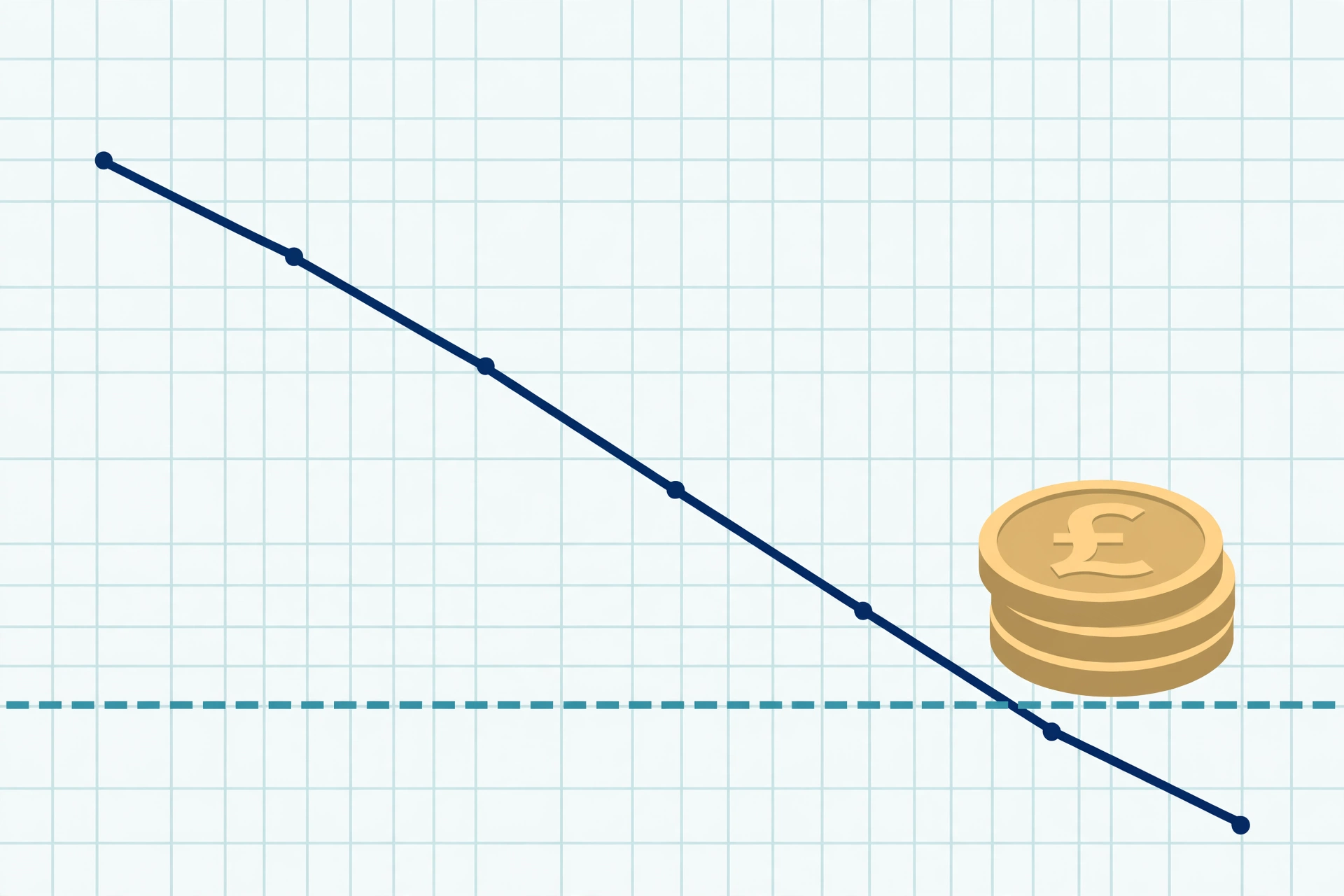
Take a freelance marketing consultant, registered for VAT for three years, whose biggest client cut its retainer. Her forecast for the next 12 months is £89,000 of net fees. She wants to deregister. On the numbers, she cannot — not on turnover grounds: £89,000 is above the £88,000 limit, even though it is below the £90,000 registration threshold. HMRC is entitled to refuse such an application.
Her options are practical. She can stay registered and re-test later. She can check whether the zero-rated exemption route applies. Or she can check the forecast itself: is the £89,000 net of VAT, and does it include a capital-asset sale? A forecast of £89,000 that includes a £5,000 capital-asset sale is really £84,000 for the test, and that passes.
Wrong figures you’ll see online — the corrections. VAT Accountants Harrow states the deregistration figure “mirrors registration” at £90,000 — it does not; the limit is £88,000. The same guide quotes £85,000 as a current threshold — £85,000 was the pre-April-2024 figure. It tells readers to submit form VAT1 — VAT1 is the registration application; cancellation is online or form VAT7. It claims deregistration can be backdated — voluntary cancellation cannot be. It states fixed late penalties of £100 and £200 — Notice 700/11 warns of a penalty but states no fixed amount. It cites Notice 700/21 for the transfer of a going concern — the correct notice is 700/9. BusinessMine and Fleximize say HMRC “usually confirms within 3 weeks” — the current Notice 700/11 says usually within 40 working days. Small Business Guide states the test as turnover “below £88,000 over the past 12 months” — the test is forward-looking; it also says businesses can deregister “even if their turnover remains above the threshold” and that you must notify HMRC “within 30 days of the intended deregistration date” — HMRC can refuse above £88,000 except on the zero-rated exemption route, and the 30 days run from becoming ineligible. Fleximize says to submit the final VAT return “alongside” the application — it comes after HMRC confirms cancellation; it also says VAT7 is needed “if you cannot access your online account”, which is not a listed VAT7 case, and that a previous VAT number “can be reactivated” — a new number is issued instead. Sleek says you can use form VAT7 “if you prefer” — VAT7 is only for the listed cases — and gives “around three weeks” for a VAT68 transfer, for which gov.uk publishes no figure.
Must vs may: compulsory and voluntary deregistration
| Situation | Must or may? | Deadline and route |
|---|---|---|
| You stop trading altogether | Must cancel | Notify HMRC within 30 days of stopping. Online if not in a VAT group; form VAT7 by post after liquidation. |
| You stop making taxable supplies | Must cancel | Notify within 30 days. Cancellation date is the date you stopped. |
| You sell the business and the buyer does not keep your VAT number | Must cancel | Form VAT7 by post. If the buyer keeps the number, use form VAT68 — no VAT7. |
| You change legal entity and want a new VAT number | Must cancel the old registration | Form VAT7 by post. If the new entity keeps the number, form VAT68 instead. |
| You join or disband a VAT group | Must cancel the individual registration | Form VAT7 by post for disbanding, with forms VAT50/51. |
| You join the Agricultural Flat Rate Scheme | Must cancel | Notify HMRC within 30 days. No deemed supply on stock here. |
| Taxable turnover expected to stay at or below £88,000 for the next 12 months | May apply | Online via Government Gateway. No 30-day deadline, but no backdating. |
| You close part of the business | May apply | Online, if the remaining turnover passes the £88,000 test. |
| Your supplies are wholly or mainly zero-rated | May apply for exemption | Written request to the VAT Registration Service — the exemption route. |
| You are a non-established taxable person (NETP) | Cannot cancel on turnover grounds | The £88,000/£90,000 thresholds do not apply to NETPs. |
The 30-day deadline for compulsory cancellation is the one that produces penalties, so be precise about when it starts: the 30 days run from the date you became ineligible — the date you stopped trading, stopped making taxable supplies, or sold the business — not from the date you get round to the paperwork, and not from an “intended” deregistration date. Stop trading on 1 October and notify HMRC on 15 November, and you are late.
The price-change condition: the rule almost nobody mentions
When you apply to cancel because turnover will fall below £88,000, HMRC will only agree if you stop charging VAT — and, for retailers, if you cut prices by the VAT element. Stop charging VAT but keep prices where they were, and your VAT-exclusive turnover goes up, not down: the whole price you used to split into net plus VAT now counts as turnover. A retailer selling at £120 including VAT has £100 of taxable turnover per sale; deregister, keep the price at £120, and taxable turnover per sale becomes £120.
Work it through with the calculator. A shop’s takings of £60,000 including VAT, remove 20%, give VAT £10,000.00 and a net amount of £50,000.00 — that £50,000 is the taxable turnover while registered. Deregister and keep charging £60,000 in total, and taxable turnover becomes the full £60,000. Scale that up: £90,000 of gross takings while registered is £75,000 of taxable turnover (verified: £90,000 gross, remove 20%, VAT £15,000.00, net £75,000.00), but the same takings after deregistration, with prices unchanged, would be £90,000 — over the limit.
The 30-day-pause trap
HMRC will not cancel your registration on turnover grounds if the fall in turnover is because you plan to stop trading, or to pause making taxable supplies, for 30 days or more in the next 12 months. The rule is in the VAT Act itself — Schedule 1, paragraph 4(2) — and only two of the ten competitor guides mention it. A wedding photographer whose season runs April to October might look at a quiet winter and think turnover has fallen below £88,000, but if the fall is because the business pauses for more than 30 days, the voluntary route is closed.
How to deregister for VAT online: step by step
Most cancellations are done online, through your Government Gateway account, in about 20 minutes if you have the information ready. That is how to deregister for VAT online in most cases — here is the full sequence, in order.
Step 1 — Gather what you will need. Your Government Gateway user ID and password; your VAT registration number (VRN); the date you want cancellation to take effect (on the voluntary route, no earlier than today — no backdating); your reason for cancelling; your forecast taxable turnover for the next 12 months, with workings; and a list of the stock and business assets you will still hold, with current market values.
Step 2 — Sign in to your business tax account. Go to GOV.UK, sign in with your Government Gateway user ID and password, and open your business tax account. Select the VAT service.
Step 3 — Find the cancellation service. Inside the VAT service, look for the option to cancel your VAT registration. Select the reason that matches your situation.
Step 4 — Give the details and the date. Enter your VAT number, the reason, and the date you want cancellation to take effect. On the voluntary route, the earliest date is the day HMRC receives the application. On the compulsory route, it is the date you stopped trading.
Step 5 — Submit and save the confirmation. Submit the application and save or print the confirmation page and reference number — your evidence of the date HMRC received it.
Step 6 — Keep charging VAT until HMRC confirms. Submitting the application changes nothing until HMRC confirms your cancellation date. Keep charging VAT, keep issuing VAT invoices showing your VAT number, and keep filing returns on the normal cycle. HMRC usually confirms within 40 working days — the figure in the current Notice 700/11, paragraph 8.1 — and you should not chase HMRC before then.
When you must use form VAT7 by post
The online service covers most cancellations, but four situations must go by post on form VAT7: you have changed your legal status and want a new VAT number; you have sold the business and the buyer is not keeping your VAT number; you are disbanding a VAT group (filed with forms VAT50/51); and the business stopped trading after liquidation. Most guides explain how to deregister for VAT online and stop there; the paper cases are these four. Download form VAT7 from GOV.UK and post it to the VAT Registration Service.
Two practical warnings. First, the online-fill version of the form cannot be part-saved — close the window and you lose what you entered, so gather everything before you start. Second, the form asks for the same stock-and-assets information as the online service, and the same £1,000 deemed-supply rule applies; a VAT7 application is not a way around the stock charge. VAT7 is not a free alternative for anyone who prefers paper. If somebody tells you to file form VAT1 to deregister, they have confused registration with cancellation: VAT1 is the application to register.

Transferring the number with form VAT68 instead of cancelling
There is a situation that looks like a cancellation but is not one: the business continues under a new owner or a new legal entity, and the VAT number moves with it. That is a transfer, handled by form VAT68. If you sell your business as a going concern and the buyer keeps your VAT number, you do not file VAT7 — you file VAT68, the number transfers, and your registration ends as part of that transfer.
The VAT68 route matters for two reasons. First, it avoids the deemed-supply charge on stock and assets: there is no deemed supply when a business is transferred as a going concern to a VAT-registered buyer, because the stock moves with the business. Cancelling instead of transferring, in a sale that qualifies as a transfer of a going concern, can create a VAT bill that need never have arisen. Second, it keeps continuity: the VAT number stays the same, with no gap in registration. The transfer is not automatic — the buyer must be VAT-registered or registering, the business must be transferred as a going concern, and both parties must agree. If the buyer does not want the number, the seller cancels on form VAT7 instead. Gov.uk publishes no processing-time figure for a VAT68 transfer.
The £1,000 stock-and-assets cliff
Of all the surprises in deregistration, the deemed-supply charge on stock and assets is the one that produces the most upset, because it is a cliff, not a slope. When you deregister, you are treated as if you supplied the stock and business assets you still hold to yourself, and VAT is due on their current market value — but only if two conditions are both met: you claimed input VAT when you bought them, and the total VAT due on all of them together exceeds £1,000. If the total is £1,000 or less, nothing is due. If it is £1,001, the whole £1,001 is due.
At the standard rate of 20%, the cliff sits at £6,000 of stock and assets including VAT. Anything worth £6,000 or less carries £1,000 of VAT or less, so nothing is due; anything worth more carries more than £1,000, and all of it is due.
Example 1 — nothing due. A small retailer holds stock worth £5,400 including VAT on the cancellation date, and claimed input VAT on all of it. Verified on the live calculator: £5,400 gross, remove 20%, gives VAT £900.00 and a net amount of £4,500.00. The VAT due is £900, under the £1,000 limit, so nothing is payable.
Example 2 — everything due. The same retailer, with £1,800 more stock: £7,200 including VAT. Verified on the live calculator: £7,200 gross, remove 20%, gives VAT £1,200.00 and a net amount of £6,000.00. The VAT due is £1,200, over the £1,000 limit, so the whole £1,200 is payable on the final VAT return — not £200, not the excess, all £1,200. What you must not do is undervalue the stock — HMRC tests current market value, not book value or cost.
Several categories are excluded from the deemed supply altogether. Intangibles — goodwill, patents, copyright — do not count. Cars are excluded, with narrow exceptions. So are margin-scheme goods, goods bought from unregistered or private sellers, goods used wholly for business entertainment, and goods on which no input VAT was claimed. Work through the list before you total anything. Damaged or obsolete stock is worth what it would actually sell for, not what it cost.
Worked examples with the free calculator
Every figure in this article was verified on the live calculator at ukvatcalculator.uk on 19 November 2026. We ran 19 test cases — 17 standard plus 2 stock-cliff cases — and all 19 passed. The table below lists the main cases:
| Example | Calculation | Calculator result |
|---|---|---|
| Turnover test, gross £88,000 | Remove 20% | VAT £14,666.67, net £73,333.33 |
| Registration threshold, gross £90,000 | Remove 20% | VAT £15,000.00, net £75,000.00 |
| Consultant fees, net £87,000 | Add 20% | VAT £17,400.00, total £104,400.00 |
| Reduced-rate costs, net £12,000 | Add 5% | VAT £600.00, total £12,600.00 |
| Zero-rated, net £60,000 | Add 0% | VAT £0.00, total £60,000.00 |
| Custom rate, net £1,000 | Add 12.5% | VAT £125.00, total £1,125.00 |
| Near-threshold, gross £99,999 | Remove 20% | VAT £16,666.50, net £83,332.50 |
| Business costs, net £8,400 | Add 20% | VAT £1,680.00, total £10,080.00 |
| Shop takings, gross £60,000 | Remove 20% | VAT £10,000.00, net £50,000.00 |
| Stock cliff — below, gross £5,400 | Remove 20% | VAT £900.00, net £4,500.00 — nothing due |
| Stock cliff — above, gross £7,200 | Remove 20% | VAT £1,200.00, net £6,000.00 — all £1,200 due |
The video below shows the key cases being run on the live calculator.
Try the same figures yourself on the add or remove VAT calculator — enter a gross price and remove 20% to find the VAT inside a quoted figure, or enter a net price and add 20% to see what a fee costs with VAT. The reverse VAT calculator strips VAT from any VAT-inclusive total, the gross to net VAT calculator does the same for turnover testing, and the VAT formula page explains the maths. The VAT percentage calculator covers custom rates. Our guides to how to register for VAT, VAT for freelancers, how to file a VAT return and the VAT margin scheme cover the other side of the decision.
Deregister vs stay: a worked money comparison
Whether cancelling actually saves you money depends almost entirely on who your customers are. The VAT you charge is not your money — you collect it for HMRC and hand it over, less the input VAT you reclaim on your costs. So the comparison is not “£17,400 of VAT saved” but what happens to your prices, your costs, and who bears the difference.
Take a self-employed consultant with £87,000 of net fees a year and £8,400 of net business costs a year — software, phone, travel, a co-working desk, subscriptions. While VAT-registered, she charges clients £87,000 plus VAT. Verified on the live calculator: £87,000 net, add 20%, gives VAT £17,400.00 and a total of £104,400.00. On her costs she pays £8,400 plus VAT — verified: £8,400 net, add 20%, gives VAT £1,680.00 and a total of £10,080.00 — and reclaims the £1,680 as input tax.
Now deregister, and run the same year twice — with VAT-registered business clients, and with private clients who cannot reclaim VAT.
| Scenario | Stay registered | Deregister, business clients | Deregister, private clients |
|---|---|---|---|
| Price charged to clients | £104,400.00 incl. VAT | £87,000, no VAT (price cut by the VAT element) | £87,000, no VAT |
| Cost to a private client | £104,400.00 (bears all the VAT) | — | £87,000 — £17,400 cheaper |
| Business costs paid | £10,080.00, reclaims £1,680 input VAT | £10,080.00, reclaims nothing | £10,080.00, reclaims nothing |
| Real income (fees less costs) | £78,600 | £76,920 (£87,000 − £10,080) | £76,920 at £87,000 pricing |
Read the table carefully — it corrects the most common misunderstanding about deregistration, and it is the part of learning how to deregister for VAT that most guides skip. With business clients, deregistering makes the consultant worse off by £1,680 a year — exactly the input VAT she can no longer reclaim. Her clients are indifferent: they paid £87,000 net either way. With private clients, her clients save £17,400 between them, because they no longer bear VAT they cannot reclaim. If she keeps her price at £87,000, she becomes £17,400 cheaper than a VAT-registered competitor. And if she keeps her price at the old VAT-inclusive £104,400, her taxable turnover becomes £104,400 — over the £88,000 limit, and HMRC can refuse the cancellation or re-register her.
The honest conclusion: deregistration is a good deal when your customers cannot reclaim VAT and your input VAT is small; a bad deal when your customers are VAT-registered businesses and your input VAT is large; and a paperwork saving in both cases. Run your own numbers before you apply, using the add or remove VAT calculator for each figure. A consultant with £8,400 of costs loses £1,680 a year by deregistering; a consultant with £27,499 of net costs loses £5,499.80 (verified: £27,499 net, add 20%, VAT £5,499.80, total £32,998.80). A repayment trader — input VAT regularly exceeding output VAT, because supplies are zero-rated — should think very carefully before deregistering. If you are on the Flat Rate Scheme, remember it ends on deregistration; our flat rate VAT scheme guide explains when the scheme helps and when it costs money.
Your final VAT return
The final VAT return is the last return you will file, and the one with the most in it. It covers the period from the start of your current VAT period up to and including the cancellation date — and it can be as short as a single day. If your cancellation date falls mid-period, the final return is a part-period return, filed after HMRC confirms the cancellation, not with the application.
What goes on the final return? Everything on a normal return for that period — output tax on supplies made up to and including the cancellation date, input tax on purchases made while registered — plus two items that only appear on a final return: the deemed-supply charge on stock and assets, if the total VAT due exceeds £1,000, and any Capital Goods Scheme final adjustment. It is usually due within one month of the end of the final period — or within two months if you use the Cash Accounting Scheme, which recognises VAT when payment is received. Our VAT cash accounting scheme guide and VAT annual accounting scheme guide cover those schemes’ timing. Do not delay the final return waiting for supplier invoices — reclaim late ones afterwards on form VAT427.

What happens to your VAT number, schemes and Making Tax Digital
Your VAT registration number — your VRN — is cancelled on the cancellation date, and it is not yours to keep using. Remove it from invoices, quotes, email signatures, letterheads, your website and marketplace listings. Tell your customers, and tell self-billing customers immediately: a self-billing customer raises VAT invoices on your behalf, and if they keep doing so after your cancellation date, they will be charging VAT in your name when you are no longer registered.
Your VAT schemes end on deregistration. The Flat Rate Scheme ends on the cancellation date. The Cash Accounting Scheme ends too, with the two-month final-return window described above. The Annual Accounting Scheme ends, with the final return covering the period from the last advance payment. Making Tax Digital obligations also end — you no longer file VAT returns using compatible software. But the records obligation does not end: keep your VAT records for six years after cancellation, including the cancellation notice, the asset list with values, and the records behind the final return.
Money still on the table after cancellation
First, input VAT on purchases made while you were registered. If you bought goods or services while registered and claimed no input VAT at the time — perhaps because the invoice arrived late — you can still reclaim it after cancellation, provided the purchase was made within the last four years and was for the taxable business. This is why you should not delay the final return waiting for supplier invoices.
Second, VAT on services received after cancellation, where the services relate to the old taxable business. The classic example is the accountant’s fee for preparing the final accounts — work done after cancellation, invoiced after cancellation, but relating to the business that was registered, and the VAT is reclaimable on VAT427 (VAT426 where an insolvency practitioner is involved).
Third, bad debt relief. If a customer never paid you, and you accounted for output tax on the supply, you can claim bad debt relief after cancellation — within four years of the date the relief became claimable. The debt must be more than six months old, written off in your accounts, and you must have taken reasonable steps to recover it. One competitor guide phrases the limit as “four years and six months”; Notice 700/11, paragraph 9.4, states it as no claim more than four years from when the relief became claimable.
EORI, option to tax and the Capital Goods Scheme
EORI number. If you import or export goods, you hold an EORI number alongside your VAT registration. When your VAT registration is cancelled, your EORI number is cancelled at the same time. Without a valid EORI number, your goods can be held at the border. If you expect to import or export after deregistration, apply for a new EORI number.
Option to tax. If you have opted to tax land or buildings — chosen to charge VAT on rent that would otherwise be exempt — the option survives cancellation. You stop being VAT-registered, but the option remains, and the rent still counts as taxable turnover towards the £90,000 re-registration threshold. Opted rent alone can push turnover back over £90,000, so before you apply, add up the opted rent for the next 12 months and test it.
Capital Goods Scheme. Land, buildings and high-value equipment bought while registered may still be inside their adjustment period — ten years for land and buildings, five years for most other capital items. On deregistration, a final adjustment may be due if the use of the asset has changed since you bought it. It is separate from the deemed-supply charge. If you hold any asset that cost more than £250,000, or any land or building, ask your accountant before you apply.
If HMRC says no
HMRC can refuse a voluntary application, and the most common reasons are the ones this guide has covered: expected turnover above £88,000, the 30-day-pause trap, the price-change condition not being met, or a forecast with no evidence behind it. A refusal is not the end of the road. First, ask HMRC for a review: write to HMRC, explain why the decision was wrong, and provide the evidence — the forecast workings, the price-change plan, the contracts behind the turnover figure. If the review upholds the refusal, appeal to an independent tribunal, which hears the case afresh.
There is also the reverse situation: if HMRC later finds your cancellation should not have happened — turnover did not fall below £88,000, or you never cut your prices — HMRC can re-register you, and you will owe the VAT on supplies made in the meantime, under a new VAT number. That is why the forecast, the price-change plan and the asset valuation matter at the application stage: they are the evidence that protects you, so keep them with your six-year records. And plan for re-registration: if turnover recovers and passes £90,000 in a rolling 12 months, or you expect it to within 30 days, re-register promptly.
7 mistakes businesses make when they deregister for VAT
1. Using £90,000 as the deregistration figure. The deregistration limit is £88,000; £90,000 is the registration threshold. One ranking guide makes this error throughout — the single biggest factual error in the search results for this topic.
2. Testing the last 12 months instead of the next 12. The £88,000 test is forward-looking. A business at £60,000 last year with £95,000 signed for next year fails; a business at £120,000 last year but £70,000 next year passes. One guide states the test as turnover “below £88,000 over the past 12 months” — the wrong direction.
3. Stopping VAT on the day you apply. Nothing changes until HMRC confirms your cancellation date. Keep charging VAT, keep issuing VAT invoices, keep filing returns until then — usually up to 40 working days after you apply. Stopping early means undercharging VAT you owe.
4. Filing the final VAT return with the application. The final return comes after HMRC confirms cancellation, not alongside the application. It covers the period up to and including the cancellation date, and cannot be filed correctly before that date is known.
5. Using the wrong form — VAT1, or VAT7 when the online service applies, or VAT7 when VAT68 applies. VAT1 is the registration form and has no part in cancellation. Form VAT7 by post is only for the four listed cases, not a matter of preference. Where a business is sold as a going concern and the buyer keeps the number, form VAT68 transfers it and no VAT7 is needed.
6. Ignoring the £1,000 stock cliff. Stock worth £7,200 including VAT carries £1,200 of VAT, and all £1,200 is due — not £200, not the excess, all of it. Stock worth £5,400 carries £900, and nothing is due. Valuing stock before you apply is worth real money. Undervaluing it is not an option: HMRC tests current market value.
7. Forgetting what survives cancellation. The option to tax survives, and the rent still counts towards re-registration. Your EORI number is cancelled with your VAT registration. Your VAT number is not reactivated if you re-register — a new one is issued. Records must be kept for six years, and input VAT, post-cancellation services and bad debt relief can still be claimed on form VAT427.
Pre-application checklist
Work through this list before you submit anything. If you cannot tick every box, you are not ready to apply.
- Route decided: compulsory or voluntary? If compulsory, the date you became ineligible and the 30-day deadline.
- £88,000 test done on paper: forecast taxable turnover for the next 12 months, VAT-exclusive, capital-asset sales excluded, with workings and evidence. Price-change plan included.
- 30-day-pause check: is the fall because you plan to stop or pause taxable supplies for 30 days or more? If yes, do not apply on turnover grounds.
- NETP check: are you a non-established taxable person? If yes, the turnover route is closed.
- Form check: online service, form VAT7 (one of the four listed cases), or form VAT68 (number transferring)? VAT1 is never the answer.
- Stock and assets valued: everything you will still hold on the cancellation date, at current market value, exclusions applied. Total VAT due — above or below £1,000?
- Capital Goods Scheme check: any land, buildings or high-value equipment still in its adjustment period? If yes, accountant’s advice obtained.
- Option to tax check: any opted property? If yes, the rent for the next 12 months added up and tested against £90,000.
- EORI check: do you import or export? If yes, plan for a new EORI number after cancellation.
- Self-billing customers identified: who raises invoices on your behalf, and what will you tell them on confirmation day?
- Government Gateway credentials working: user ID and password tested, VAT number to hand, cancellation date decided.
- Final-return plan: who will file it, by when (one month, or two months on cash accounting), and what goes on it?
- Records plan: where will the cancellation notice, asset list, forecast workings and final return be kept for six years?
- Post-cancellation claims noted: any late supplier invoices, accountant’s final-accounts fee, or unpaid debts to claim on form VAT427?
The bottom line on how to deregister for VAT
If there is one sentence to remember from this whole guide, it is this: test forward, price honestly, and keep charging VAT until HMRC says stop. The £88,000 test looks at the next 12 months, not the last 12. The price-change condition means your VAT-exclusive price becomes your new price, and keeping old prices can push you straight back over the limit. Nothing changes on the day you apply — keep charging VAT, keep filing returns, and keep your VAT number on your invoices until HMRC confirms your cancellation date, usually within 40 working days. Value your stock before you apply, file the final return after confirmation, and keep your records for six years.
Frequently asked questions
How do I deregister for VAT in the UK?
Apply online through your Government Gateway business tax account in most cases. Four situations must use form VAT7 by post instead: a change of legal status wanting a new number, a sale where the buyer does not keep the number, a VAT group disbanding, and a business that stopped trading after liquidation. Keep charging VAT until HMRC confirms your cancellation date, usually within 40 working days, then file a final VAT return.
What is the VAT deregistration threshold?
£88,000 of taxable turnover expected in the next 12 months, VAT-exclusive, with capital-asset sales excluded — the deregistration limit in the VAT Act 1994, Schedule 1, and in HMRC’s VAT Notice 700/11. The registration threshold is £90,000, in force since 1 April 2024.
Can I deregister for VAT if my turnover is below £90,000 but above £88,000?
Not on turnover grounds. A business expecting £89,000 of taxable turnover in the next 12 months is above the £88,000 limit, even though it is below the £90,000 registration threshold, so HMRC can refuse. Stay registered and re-test later, check the zero-rated exemption route, or check the forecast — capital-asset sales are excluded, and the test is VAT-exclusive, so a £99,999 VAT-inclusive forecast is only £83,332.50 for the test.
How long does it take HMRC to confirm VAT deregistration?
Usually within 40 working days, according to the current VAT Notice 700/11, paragraph 8.1. Do not chase HMRC before then — the “3 weeks” figure in several guides is out of date. Keep charging VAT until HMRC confirms your cancellation date.
Do I have to pay VAT on stock when I deregister?
Only if the total VAT due on stock and business assets you still hold exceeds £1,000 — and then all of it is due, not just the excess. Stock worth £5,400 including VAT carries £900 of VAT, so nothing is due; stock worth £7,200 carries £1,200, so all £1,200 is due. The charge applies only where you claimed input VAT, and intangibles, cars, margin-scheme goods and private purchases are excluded.
What form do I use to deregister for VAT — VAT7 or VAT1?
Neither VAT1 nor, in most cases, VAT7. VAT1 is the registration application and has no part in cancellation. Most cancellations are done online through your Government Gateway business tax account. Form VAT7 by post is only for the four listed cases; if the business is sold as a going concern and the buyer keeps the number, use form VAT68 instead.
Do I need to file a final VAT return after deregistering?
Yes. The final VAT return covers the period up to and including the cancellation date, and it is filed after HMRC confirms the cancellation — not with the application. It is usually due within one month, or within two months on the Cash Accounting Scheme. It includes output tax up to the cancellation date, input tax on purchases made while registered, and the deemed-supply charge if one is due.
Can I claim VAT back after I deregister?
Yes, in three cases, all claimed on form VAT427: input VAT on purchases made while registered, within four years; VAT on services received after cancellation that relate to the old taxable business, such as your accountant’s final-accounts fee; and bad debt relief, within four years of the relief becoming claimable. You cannot reclaim VAT on goods bought after cancellation.
Sources: HMRC VAT Notice 700/11 (Cancelling your registration), updated 31 March 2026 — gov.uk; VAT Act 1994, Schedule 1 — legislation.gov.uk. Figures verified on the live calculator at ukvatcalculator.uk on 19 November 2026 (19 test cases, 19 passed).