
VAT Cash Accounting Scheme Explained: Pay VAT Only When Customers Pay You
The VAT cash accounting scheme is the simplest cash-flow fix available to a VAT-registered small business: instead of paying HMRC the VAT on an invoice the day you raise it, you pay it when your customer actually pays you. If your customers take 30, 60 or 90 days to settle up, that one change can keep thousands of pounds in your bank account each quarter instead of handing it to HMRC months before you have received it. This guide explains how the VAT cash accounting scheme works, who can join, the thresholds that apply, the transactions it does not cover, and how to switch — with every worked example checked on a live calculator.
What Is the VAT Cash Accounting Scheme?
Under standard VAT accounting — sometimes called invoice accounting — the VAT on a sale falls into the VAT return for the period covering the invoice date, whether or not the customer has paid. The tax point is normally the invoice date, so a business can owe HMRC money it has not yet received. The VAT cash accounting scheme flips that timing: output VAT is due when the customer pays, and input VAT is reclaimed when you pay your supplier. Your VAT bill moves in step with your actual cash position rather than your invoicing calendar.
That timing change matters most for businesses that sell on credit: tradespeople, agencies, consultants, wholesalers and contractors whose customers pay weeks after the work is done. It matters least for businesses paid at the till, such as shops and cafés, where invoice and payment happen on the same day and the timing difference is negligible.
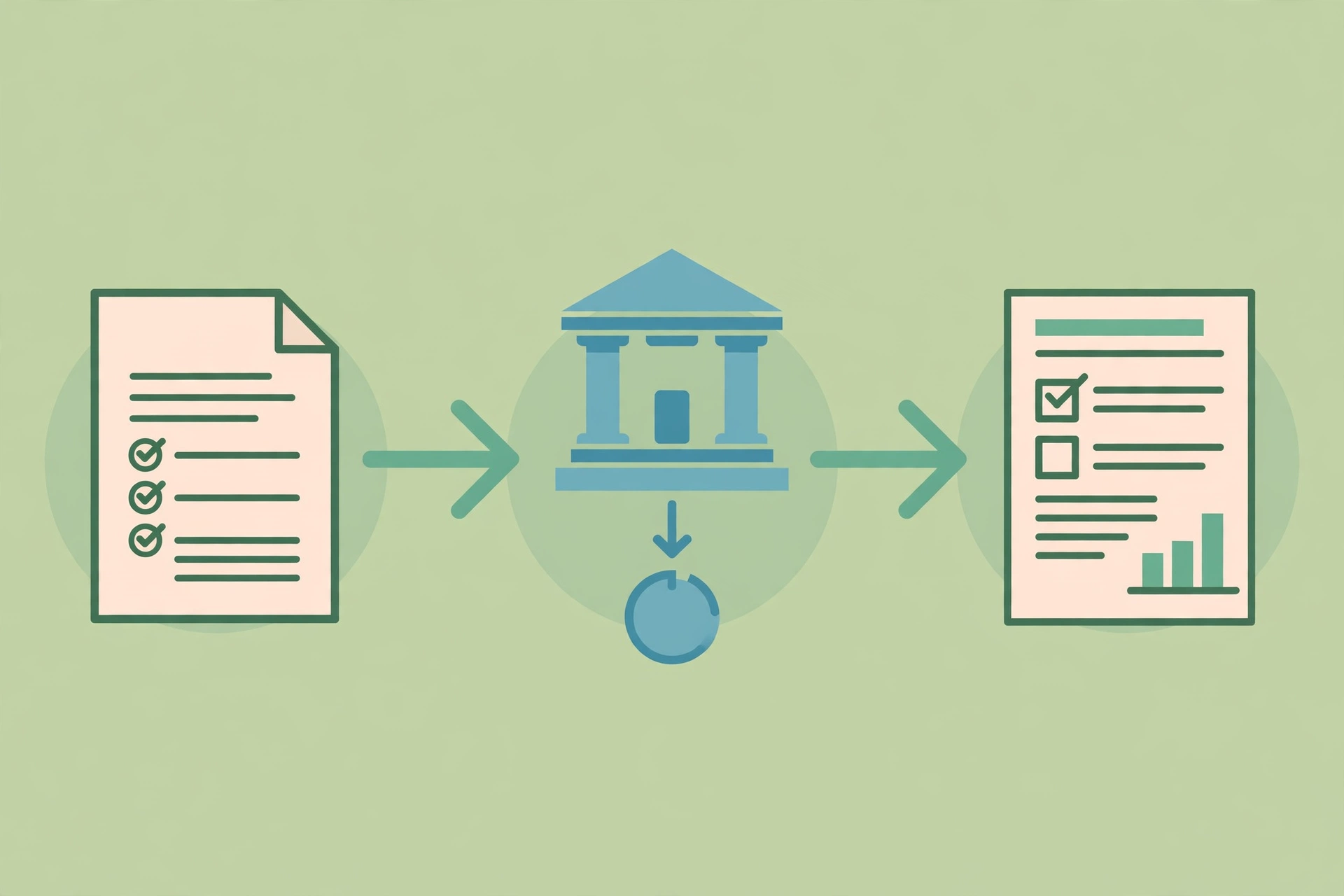
The scheme is an HMRC scheme, not a tax break: the same total VAT is paid in the end. What changes is when it is paid. That distinction is the whole point — and the whole risk, because the mirror image applies to purchases. If you pay suppliers promptly but customers pay slowly, you win on both sides; if the reverse is true, the scheme can delay your VAT repayments.
VAT Cash Accounting Scheme vs Standard Accounting
The table below sums up the difference at a glance:
| Feature | Standard (invoice) accounting | VAT cash accounting scheme |
|---|---|---|
| VAT on sales due | Return covering the invoice (tax point) date | Return covering the date the customer pays |
| VAT on purchases reclaimed | Return covering the supplier’s invoice date | Return covering the date you pay the supplier |
| Bad debts | Separate bad debt relief claim after 6 months unpaid | Built in: unpaid invoices never create VAT due |
| Turnover limit | None | Join at £1.35 million or less; leave above £1.6 million |
| Best suited to | Businesses paid promptly or often reclaiming VAT | Businesses with credit customers and slow payers |
One practical consequence is automatic bad debt relief. Under standard accounting, a customer who never pays still leaves you funding the VAT until you can claim bad debt relief, normally after the invoice has been outstanding for six months. Under the VAT cash accounting scheme, an invoice that is never settled never creates a VAT liability in the first place, so there is nothing to reclaim.
Who Can Join the VAT Cash Accounting Scheme?
You can use cash accounting if your business is registered for VAT and your estimated VAT taxable turnover for the next 12 months is £1.35 million or less. VAT taxable turnover means the total of everything you sell that is not VAT exempt — standard-rated and zero-rated sales count, exempt sales do not, and anticipated sales of capital assets previously used in the business are left out. Note that you must be VAT-registered first: if your taxable turnover is approaching the £90,000 VAT registration threshold (in force since April 2024, with deregistration at £88,000), registration comes before any scheme choice.
You cannot use the scheme if any of these apply:
- You use the VAT Flat Rate Scheme — the flat rate scheme has its own cash-based turnover method, so the two are never combined (see the correction below).
- You are not up to date with your VAT returns or payments, or you have not arranged with HMRC to clear any arrears.
- You have been convicted of a VAT offence, or received a penalty for VAT evasion involving dishonest conduct, in the last 12 months.
There is no application form and you do not have to tell HMRC. You simply begin using cash accounting at the start of a VAT accounting period — and you must not apply it retrospectively to earlier periods. If you are already registered, take care not to account twice for invoices raised before the switch and paid after it: anything already dealt with under invoice accounting stays dealt with.
The Two Thresholds: £1.35 Million to Join, £1.6 Million to Leave
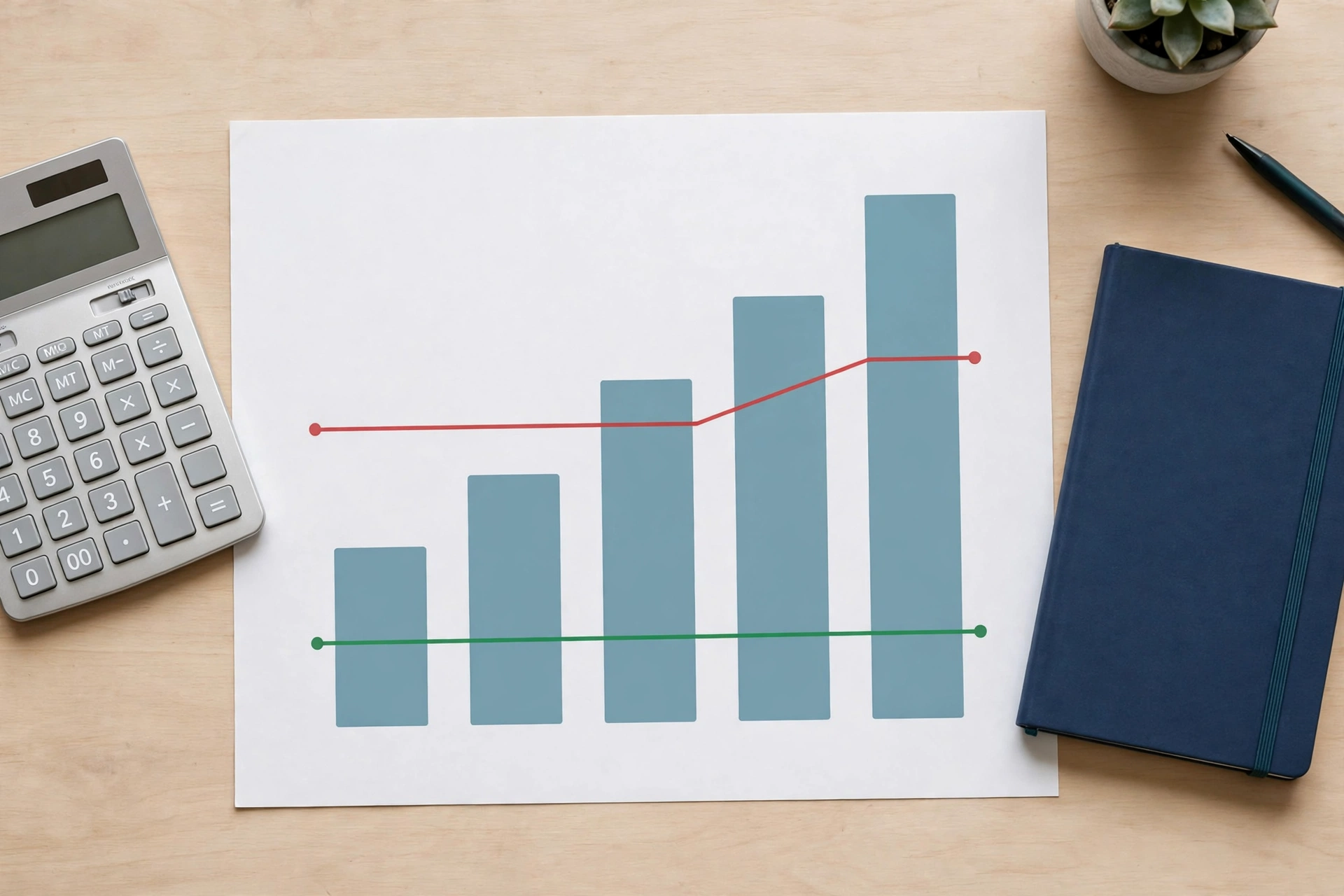
The entry test looks forward: reasonable grounds for believing taxable turnover in the next 12 months will not exceed £1,350,000. The exit test looks back: once your VAT taxable turnover for the previous 12 months has gone over £1,600,000, you must leave the scheme at the end of a VAT period. Between those two figures there is a buffer zone — a business that grows past £1.35 million does not have to leave immediately, but it cannot join (or rejoin) above that figure.
Monitor turnover during the year rather than discovering the breach at year end. Growth that pushes you over £1.6 million also triggers the leaving rules below, which can produce a larger VAT bill in the exit period, so build that liability into your cash forecast before growth forces you out.
Worked Examples, Verified on the Live Calculator
Every figure below was run through the live calculator on ukvatcalculator.uk on 1 November 2026, so you can check each one yourself with the free add and remove VAT calculator.
Example 1: A sale paid a quarter late
A joinery firm invoices a contractor £12,000 plus VAT. Using the calculator’s add-20% mode, £12,000 net gives VAT of £2,400 and a gross invoice of £14,400. The invoice is raised on 20 September, the VAT quarter ends 30 September, and the contractor pays on 25 October. Under standard accounting the £2,400 falls into the September quarter return — before the firm has been paid. Under the VAT cash accounting scheme it falls into the December quarter return, when the money arrived. That is £2,400 staying in the business for an extra quarter.
Example 2: The supplier side — the mirror image
The same firm receives a supplier invoice for £6,000 including VAT. Running £6,000 through the calculator’s remove-20% mode gives VAT of £1,000 and a net cost of £5,000. If the invoice arrives in June but the firm pays in September, the £1,000 of input VAT is reclaimed on the September return, not June’s. Businesses that pay suppliers fast and collect from customers slowly gain on both sides; businesses that do the opposite should model both sides before switching.
Example 3: A part payment
Cash accounting follows money, including part payments. A customer owes a £1,200 gross invoice and pays £600 of it. Removing 20% VAT from £600 gives VAT of £100 and a net £500 — so only £100 of output VAT enters that period’s return, not the full £200 on the whole invoice (removing 20% from the full £1,200 gives VAT of £200 and net £1,000). Reconcile receipts invoice by invoice, including part payments, or the return will be wrong.
The video above shows the live calculator running these exact cases: £6,000 remove 20%, £1,200 remove 20% and £12,000 add 20%. If you want to split a gross figure into net and VAT yourself, the reverse VAT calculator and the gross to net VAT calculator do the same calculation, and the VAT percentage calculator checks what rate a given split implies.
Transactions Excluded From the VAT Cash Accounting Scheme
Cash accounting does not apply to every transaction. For the following, standard invoice-date rules continue to apply even while the rest of the business uses cash accounting:
- Invoices with payment terms of 6 months or more.
- Invoices raised in advance, before the goods are supplied or the service performed.
- Goods bought or sold under lease purchase, hire purchase, conditional sale or credit sale agreements.
- Importing goods into Northern Ireland from the EU.
- Goods removed from a customs warehouse.
A mostly cash-accounting business still needs to flag these in its software, because one excluded invoice accounted for on payment date instead of invoice date is a return error. The full list and detail are in HMRC’s VAT Notice 731.
Cash Accounting and the Flat Rate Scheme: Correcting a Common Error
Some guides claim the cash accounting scheme can be used together with the flat rate scheme. That is wrong, and it is worth saying plainly because acting on it would put a business on two incompatible schemes at once. GOV.UK states that you cannot use cash accounting if you use the VAT Flat Rate Scheme: the flat rate scheme already has its own option for working out turnover on a cash basis. If you are comparing the two, read our flat rate VAT scheme guide first — the schemes suit different business models, and you must pick one.
Cash accounting can be combined with the annual accounting scheme, which replaces quarterly returns with a single annual return plus advance payments. That combination suits stable businesses that want both a simpler filing schedule and payment-date VAT accounting. The VAT formula page explains the underlying net, VAT and gross maths either scheme relies on.
Leaving the VAT Cash Accounting Scheme
You can leave at any time, and you must leave if you are no longer eligible. Leave at the end of a VAT accounting period, and remember that leaving does not erase VAT on sales invoiced but not yet paid: that outstanding VAT must be brought into account. The normal rule lets you report and pay it over the following 6 months, which smooths the transition back to invoice accounting. But you must pay it straight away if your VAT taxable turnover exceeded £1.35 million in the last 3 months, or if HMRC has written to withdraw your use of the scheme. Plan the exit quarter’s cash flow around whichever rule applies to you — the bill can be the largest of the year.
Record-Keeping: Payment Dates Are Now Tax Data
Under invoice accounting, the invoice date drives the return. Under the VAT cash accounting scheme, the payment date drives it, so your prime record becomes a cash book summarising payments made and received, with a separate column for the VAT, cross-referenced to the underlying invoices. Keep the invoices themselves as usual — cash accounting changes timing, not paperwork — and keep VAT records for six years unless HMRC has agreed a shorter period.
Because VAT now follows payments, bank reconciliation becomes part of VAT preparation, not an afterthought. Match every customer receipt and supplier payment to its invoice before filing, including card settlements, cash and part payments. An unallocated receipt sitting in suspense at quarter end can mean output VAT omitted from the return even though the cash is already in the account. Most accounting software has a cash-accounting mode that automates the payment-date logic — switch it on from the first day of the new period, not mid-quarter — and returns are still filed under Making Tax Digital in the normal way.
Is the VAT Cash Accounting Scheme Right for Your Business?
It suits businesses that: have customers on 30, 60 or 90-day terms; occasionally suffer bad debts; want their VAT bill to mirror bank receipts; and have modest purchase costs relative to sales.
It is less valuable when: customers pay promptly; the business regularly reclaims significant VAT (for example on zero-rated sales, where delaying input recovery delays repayments); or the business prefers simpler invoice-date record-keeping and has few late-payment problems. Start-ups with heavy initial spending on equipment and stock — where input VAT exceeds output VAT — should normally delay joining, since the scheme would postpone their repayments.
The honest test is a single quarter modelled both ways: list what you invoiced, what you were actually paid, what suppliers invoiced you and what you actually paid them. If the cash-accounting return is smaller and your bank balance healthier, the scheme is earning its keep. If the two returns are nearly identical, the extra record-keeping buys you nothing.
How to Switch: A Short Checklist
- Confirm estimated VAT taxable turnover for the next 12 months is £1.35 million or less.
- Check all VAT returns are filed and all VAT paid, or arrears agreed with HMRC.
- Confirm you are not on the flat rate scheme and have no VAT conviction in the last 12 months.
- Pick the start: the beginning of your next VAT accounting period.
- Set your software to cash accounting from that date, and list every invoice already accounted for under invoice accounting so none is counted twice.
- From day one, record the payment date of every sale and purchase, and reconcile the bank before each return.
- Diary a turnover check each quarter against the £1.6 million exit limit.
Frequently Asked Questions
Do I need to apply to HMRC to join the VAT cash accounting scheme? No. If you meet the conditions, you start at the beginning of a VAT accounting period. You do not have to tell HMRC you are using it, and you do not have to tell them when you stop — but you must still account for outstanding VAT when you leave.
What happens if a customer never pays? Under the VAT cash accounting scheme, no VAT is ever due on that sale, because VAT follows payment. That is automatic bad debt protection; under standard accounting you would pay the VAT on the invoice date and claim bad debt relief later, normally after six months.
Can I use cash accounting with the flat rate scheme? No. GOV.UK bars the combination. Cash accounting can be combined with the annual accounting scheme, but not with the flat rate scheme.
Which transactions stay on invoice accounting? Invoices with payment terms of six months or more, advance invoices, lease, hire purchase, conditional and credit sale agreements, EU-to-Northern-Ireland imports and customs-warehouse removals. These follow normal tax-point rules even inside a cash-accounting business.
When must I leave the scheme? When VAT taxable turnover for the previous 12 months exceeds £1.6 million, leave at the end of a VAT period. Outstanding VAT can usually be spread over six months, but must be paid immediately if turnover exceeded £1.35 million in the last three months or HMRC has withdrawn the scheme.
Does cash accounting change how I file my VAT return? No. Returns are filed in the normal way, including under Making Tax Digital. Only the figures change: they reflect payment dates rather than invoice dates.
Check Your Own Figures Free
The fastest way to see whether the VAT cash accounting scheme helps you is to run your own quarter through the calculator: split gross invoices into net and VAT, work out what each return would contain under invoice dates versus payment dates, and compare. The free calculator on the ukvatcalculator.uk homepage handles add and remove VAT at 20%, 5%, 0% and any custom rate, with no signup — and the worked examples above show exactly how to use it for each side of the scheme.
Sources: GOV.UK, VAT Cash Accounting Scheme (eligibility, thresholds, joining and leaving) and VAT Notice 731. This article is general information, not personal tax advice — speak to a qualified accountant about your own circumstances before acting.
5 Comments