
UK VAT Rates Explained: 20%, 5% and 0% — 2026 Guide for Businesses
If you sell anything in the UK, there is one question you will answer on almost every invoice: which rate? The UK VAT rates are 20% (standard), 5% (reduced) and 0% (zero) — three numbers that decide what you charge, what you can reclaim, whether you must register, and which boxes your VAT return fills. Get the rate wrong and you either overcharge your customers or underpay HMRC, and both mistakes cost real money. This guide sets out the UK VAT rates as they stand in November 2026, including a change most rate guides have not caught up with yet: domestic electricity in Great Britain is currently 0%, not 5%. Every worked example below was run on the live calculator at ukvatcalculator.uk on 5 November 2026 — the figures are tested, not copied.
There are only three UK VAT rates, and then there is a fourth category that is not a rate at all: exempt supplies. Exempt goods and services carry no VAT, but they sit outside the VAT system entirely, which changes what the seller can reclaim and whether the sale counts towards the registration threshold. Confusing zero-rated with exempt is the single most expensive misunderstanding in this whole subject, and it gets its own section below.
UK VAT Rates at a Glance
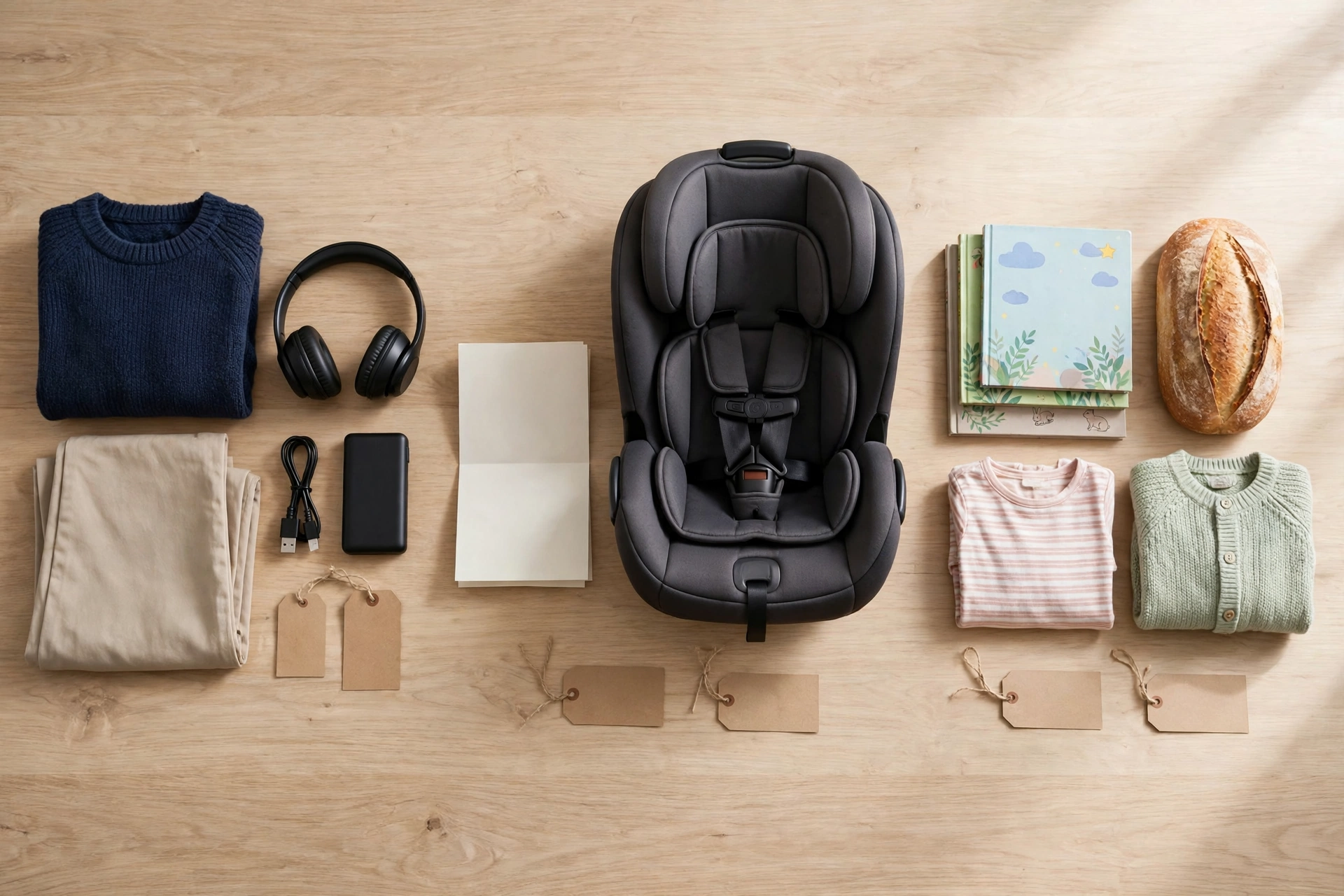
The table below is the whole subject in one place. The detail — and the traps — follow in the sections after it.
| Rate | Name | What it covers | Can the seller reclaim VAT on costs? |
|---|---|---|---|
| 20% | Standard rate | Most goods and services: electronics, adult clothing, alcohol, restaurant meals, professional services, hotel rooms, vehicle sales | Yes |
| 5% | Reduced rate | Domestic gas and heating fuel, children’s car seats, mobility aids for people aged 60 or over, smoking cessation products, some residential conversions | Yes |
| 0% | Zero rate | Most food, children’s clothes and footwear, books, newspapers and e-publications, women’s sanitary products, public transport, most exports, new-build homes | Yes |
| No VAT | Exempt | Financial services, insurance, most education, health services, Royal Mail universal postal services, some property lettings | No (on costs used for exempt sales) |
Two facts in that table do most of the work. First, the standard rate is the default: if a sale is not specifically listed as reduced, zero-rated or exempt, it is 20%. Second, the right-hand column is where the money is. A zero-rated seller charges customers nothing extra and still reclaims the VAT on its own costs; an exempt seller also charges nothing extra but cannot reclaim it. Same price at the till, very different outcome for the business.
The Standard Rate: 20% — the Default UK VAT Rate
The standard rate of 20% applies to most goods and services sold in the UK, and it has been 20% since 4 January 2011 — over fifteen years without a change. Before that it was 17.5% (from 1991), with a brief cut to 15% during the 2008 financial crisis. VAT itself dates from 1 April 1973, when it replaced purchase tax at a standard rate of 10%. The Autumn Budget on 28 October 2026 kept the 20% standard rate in place for 2027–28, so there is no change to plan for.
What falls under 20%? In practice, almost everything a typical shop, freelancer or online seller deals in: adult clothing, electronics, furniture, alcohol, restaurant and café meals, hotel accommodation, professional services such as consulting, marketing and design, software, vehicle sales and repairs, and fuel at the pump. If you are unsure which rate applies to something you sell, the safe working assumption is 20% unless HMRC’s own list says otherwise — that is the rule the government’s guidance itself points to.
The arithmetic is one multiplication. A net price of £500 becomes £600 gross at 20%: £500 × 1.2 = £600, and the VAT is the £100 difference. We ran that exact case on the live calculator — £500 add 20% gave VAT £100.00 and total £600.00. A bigger one: £10,000 net at 20% gives VAT £2,000.00 and a total of £12,000.00. And a small, everyday one: a £37.99 item at 20% carries £7.60 of VAT and sells for £45.59. All three were verified on the calculator on 5 November 2026, and the full test log is in TEST-RESULTS.md.
The Reduced Rate: 5% — a Short List, Not a Judgement Call
The reduced rate of 5% applies to a deliberately short list of goods and services where the government wants to keep costs down — mostly around the home, health and safety. The list is set by law, so there is no room for judgement: either the item is on it or it is not.
- Domestic fuel and power: gas, heating oil and solid fuel supplied for residential use. Domestic electricity is the exception right now — see the 2026 change section below.
- Children’s car seats, booster seats and booster cushions (including carrycots with restraint straps).
- Mobility aids for older people: equipment installed in the home of someone aged 60 or over.
- Smoking cessation products: nicotine patches and gum.
- Certain building work: converting a building to create more dwellings, and renovating a dwelling that has been empty for at least two years.
- Energy-saving materials installed in homes — currently 0% rather than 5% (see below), with 5% returning on 1 April 2027.
Note what is not on the list. A child car seat is 5%, but a pram or pushchair is standard-rated at 20%. Domestic gas is 5%, but fuel for business use is usually standard-rated. The conditions matter as much as the item: the rate depends on who is buying, where the goods are used, and how they are supplied — GOV.UK’s own guidance says the rate can change with the circumstances of the sale.
A 5% worked example: a £200 net domestic gas bill carries £10.00 of VAT and totals £210.00. A £1,200 conversion job at 5% carries £60.00 and totals £1,260.00. A £89.95 item at 5% carries £4.50 of VAT and totals £94.45. All three were verified on the live calculator. To add 5% by hand, multiply the net figure by 1.05; to remove it from a gross figure, divide by 1.05 — a £210 gross bill at 5% strips back to £200.00 net with £10.00 of VAT, also verified live.
The Zero Rate: 0% — Taxable, but at Nothing
Zero-rated supplies are taxed at 0%. That sounds like a contradiction, and it is the most useful one in VAT: a zero-rated sale is still a taxable supply, so it counts towards the £90,000 registration threshold, appears on the VAT return, and — crucially — lets the seller reclaim the VAT on its own costs. The customer pays no VAT, but the business stays inside the VAT system.
The zero rate covers essentials and a few deliberate policy choices:
- Most food and drink for human consumption — but not catering, alcoholic drinks, confectionery, crisps and savoury snacks, hot food, hot takeaways, ice cream, soft drinks and mineral water, or sports drinks. Those are all standard-rated at 20%. A cold sandwich from a supermarket is 0%; the same sandwich eaten in a café, or sold hot, is 20%.
- Children’s clothing and footwear (including babywear) — in children’s sizes. Adult-sized items are standard-rated even if a child wears them.
- Books, newspapers, magazines, pamphlets, maps and printed music — and since 1 May 2020, their electronic versions too.
- Women’s sanitary products — zero-rated since 1 January 2021 (period underwear joined the zero rate on 1 January 2024).
- Public transport in vehicles carrying ten or more passengers, most exports of goods outside the UK, and the construction and first sale of new homes.
- Prescription medicines dispensed by a registered pharmacist, equipment for blind and disabled people, and building work adapting a disabled person’s home.
Because the rate is 0%, the arithmetic is trivially simple and worth stating anyway: a £450 zero-rated order carries £0.00 of VAT and totals £450.00 — verified live. The point of testing it is not the maths; it is confirming the calculator treats a 0% sale as a taxable supply that still records a total, rather than erroring or treating it as exempt.

Zero-Rated vs Exempt: the Difference That Costs £6,000
At the till, zero-rated and exempt look identical: the customer pays no VAT either way. For the business, they are opposites. Here is the comparison that makes it concrete, using simple arithmetic anyone can check (£30,000 × 20% = £6,000):
| Item | Bookshop (zero-rated sales) | Physiotherapy clinic (exempt sales) |
|---|---|---|
| Sales in the year | £120,000 | £120,000 |
| VAT added to customer prices | £0 | £0 |
| Must register for VAT? | Yes — sales count towards the £90,000 threshold (it could ask HMRC for exemption from registration, but would then lose the reclaim) | Not possible — every sale is exempt |
| VAT on a £30,000 fit-out | £6,000, reclaimed in Box 4 | £6,000, which cannot be reclaimed |
| Real cost of the fit-out | £30,000 | £36,000 |
The bookshop reports £120,000 of sales in Box 6 and no output VAT in Box 1, and claims the £6,000 in Box 4, which HMRC repays when there is no VAT on sales to set it against. The clinic carries the same £6,000 as a cost, so its fit-out ends up £6,000 dearer even though both charge their customers nothing. That gap — not the price on the receipt — is why the line between zero-rated and exempt matters so much to a business.
Many businesses sit between the two: a clinic that also sells exercise equipment at 20% makes both taxable and exempt sales, and the partial exemption rules decide how much VAT on shared costs it can recover. Under VAT Notice 706, a business can still reclaim all its VAT if the VAT linked to exempt sales averages no more than £625 a month and is no more than half of its total input tax. And one exempt supply can become taxable by choice: a landlord who opts to tax charges 20% on the rent and can then reclaim the VAT on related costs.
UK VAT Rates in 2026: What Changed This Year
The headline UK VAT rates have not moved — 20%, 5% and 0% are the same as they have been for years, and the Autumn Budget on 28 October 2026 kept them for 2027–28. But three targeted changes in 2026 catch people out, and most rate guides have not updated for them:
- Domestic electricity in Great Britain is now 0%. Since 1 October 2026, VAT on domestic electricity in Great Britain has been 0% instead of 5%, under a temporary cost-of-living measure (HMRC Revenue and Customs Brief 10 (2026)). The Autumn Budget on 28 October 2026 extended the cut to 30 June 2027, with 5% returning on 1 July 2027. Domestic gas stays at 5%, and domestic electricity in Northern Ireland stays at 5% — the cut covers Great Britain only. GOV.UK’s own rates page still lists domestic electricity at 5% and appears not to have been updated yet, and several major guides (Stripe, GoForma, LegalClarity) still say 5% too. If your billing or your prices still use 5% for GB household electricity, they are wrong today.
- Public EV charging is 20% from 1 November 2026. The Budget confirmed that electricity from public electric vehicle charge points is charged at the standard 20% rate, because it is not domestic use. Home charging on a domestic supply follows the domestic rate.
- Energy-saving materials are 0% until 31 March 2027. Installing insulation, solar panels, heat pumps and similar materials in homes has been zero-rated since 1 April 2022 (1 May 2023 in Northern Ireland). The 0% rate ends on 31 March 2027 and 5% returns from 1 April 2027, when heat batteries join the relief at 5%.
Two changes from earlier in 2026 have already ended and should not be relied on: the Great British Summer Savings scheme applied a temporary 5% rate to children’s meals, children’s tickets and family attraction admissions from 25 June to 1 September 2026, and that period is over. And private school fees moved from exempt to 20% on 1 January 2025. If a guide you are reading still lists the summer 5% rate as current, or still calls private school fees exempt, it is out of date.
Worked Examples: UK VAT Rates, Verified Live
Every figure in this table was produced by the free calculator on the ukvatcalculator.uk homepage on 5 November 2026, using the site’s own add and remove modes at each of the UK VAT rates. The raw outputs are logged in TEST-RESULTS.md.
| Example | Rate | Calculator result |
|---|---|---|
| £500 net — add VAT | 20% | VAT £100.00, total £600.00 |
| £10,000 net — add VAT | 20% | VAT £2,000.00, total £12,000.00 |
| £840 net — add VAT | 20% | VAT £168.00, total £1,008.00 |
| £37.99 net — add VAT | 20% | VAT £7.60, total £45.59 |
| £250,000 net — add VAT | 20% | VAT £50,000.00, total £300,000.00 |
| £200 net — add VAT | 5% | VAT £10.00, total £210.00 |
| £1,200 net — add VAT | 5% | VAT £60.00, total £1,260.00 |
| £89.95 net — add VAT | 5% | VAT £4.50, total £94.45 |
| £450 net — add VAT | 0% | VAT £0.00, total £450.00 |
| £8,000 net — add VAT | 12.5% (custom) | VAT £1,000.00, total £9,000.00 |
| £600 gross — remove VAT | 20% | VAT £100.00, net £500.00 |
| £2,400 gross — remove VAT | 20% | VAT £400.00, net £2,000.00 |
| £210 gross — remove VAT | 5% | VAT £10.00, net £200.00 |
| £99 gross — remove VAT | 0% | VAT £0.00, net £99.00 |
| £120 gross — remove VAT | 20% | VAT £20.00, net £100.00 |
Two of those rows deserve a second look. The £37.99 case shows the calculator rounding £7.598 of VAT to £7.60 and the total to £45.59 — the kind of penny rounding that matters when you reconcile a till at the end of the day. And the 12.5% custom-rate row is there because real life is not always 20/5/0: a business on the flat rate scheme, for example, pays HMRC a fixed percentage of its VAT-inclusive turnover, and the site’s custom rate handles any percentage you type in. For the underlying maths, the VAT formula guide sets out each calculation step by step.
The video above is a real screen recording of the live calculator working through three of the cases: £500 at 20% (£100 VAT, £600 total), £200 at 5% (£10 VAT, £210 total), and £120 gross with 20% removed (£20 VAT, £100 net).
How to Add and Remove VAT at Each Rate
Adding VAT is one multiplication; removing it is one division — and removing it is the step people get wrong. The multipliers for the UK VAT rates are:
| Rate | Add VAT (net → gross) | Remove VAT (gross → net) | VAT inside a gross price |
|---|---|---|---|
| 20% | Multiply by 1.20 | Divide by 1.20 | One sixth of the gross |
| 5% | Multiply by 1.05 | Divide by 1.05 | One twenty-first of the gross |
| 0% | Multiply by 1.00 | Divide by 1.00 | £0 |
The classic mistake is subtracting 20% from a gross price. The 20% was charged on the net figure, not on the total, so taking 20% off the gross overstates the VAT. On a £600 gross invoice, 20% off gives £120 of “VAT” — wrong by £20. Divide by 1.20 instead, or take one sixth: £600 ÷ 6 = £100, which is the real VAT, and the net is £500. If you are checking a figure you were quoted, the reverse VAT calculator does the division for you, the add and remove VAT calculator handles both directions, and the gross to net calculator strips VAT out of a total. The VAT percentage calculator is the one to use when you need to work backwards from a gross figure to the rate itself.
Which VAT Return Boxes Each Rate Lands In
The rate on a sale decides which boxes of the VAT return it fills. Returns are usually quarterly, and the return and payment are both due one calendar month and seven days after the end of the VAT period. Since April 2022, Making Tax Digital for VAT has applied to all VAT-registered businesses, so the return must be filed through compatible software.
| Treatment | Box 1 — output tax | Box 6 — total sales ex VAT | Counts towards £90,000 threshold? |
|---|---|---|---|
| Standard rated 20% | VAT charged | Net sale value | Yes |
| Reduced rated 5% | VAT charged | Net sale value | Yes |
| Zero rated 0% | Nothing | Net sale value | Yes |
| Exempt | Nothing | Net sale value | No |
The row to remember is the zero-rated one: nothing in Box 1, but the sale still goes in Box 6 and still counts towards the threshold. A business selling only zero-rated goods — a bookshop, a children’s clothing shop, a food wholesaler — must still register once its taxable turnover passes £90,000, even though it never charges a penny of VAT. That is the practical consequence of zero-rated being a taxable supply at 0% rather than an exemption.
UK VAT Rates and the £90,000 Registration Threshold
You must register for VAT once your taxable turnover passes £90,000 in any rolling 12-month period — a threshold in force since April 2024, with deregistration available below £88,000. Taxable turnover means your standard-rated, reduced-rated and zero-rated sales added together. It excludes exempt sales and the sale of capital assets. There are two triggers to watch: the backward look (if your turnover passed £90,000 at the end of any month, you must register within 30 days of the end of that month) and the forward look (if you expect to pass £90,000 in the next 30 days alone, you must register by the end of that 30-day period).
Two things about the threshold still appear wrong in older guides. First, the figure is £90,000, not £85,000 — the old figure went out of date in April 2024 and still circulates. Second, zero-rated sales count towards it. A food business doing £100,000 of zero-rated sales must register even though it charges no VAT; a business doing £100,000 of exempt sales cannot register at all. The rate on what you sell decides whether registration is compulsory, voluntary, or impossible.
Registering below the threshold is voluntary, and it can pay: a business whose sales are mostly zero-rated gets to reclaim the VAT on its costs, and a business selling mainly to other VAT-registered firms looks more credible with a VAT number on its invoices. The trade-off is the admin — quarterly returns under Making Tax Digital — and the fact that once you charge VAT, your prices to non-VAT-registered customers effectively rise by the rate.
Five Errors in Other UK VAT Rates Guides, Corrected
Because this is one of the most-searched VAT topics, it is also one of the most copied — and several confident-sounding statements in ranking guides are wrong. Each correction below was checked against GOV.UK guidance or the HMRC briefs cited:
- “Domestic electricity is 5%.” Wrong as of 1 October 2026. Domestic electricity in Great Britain is 0% until 30 June 2027 (HMRC Revenue and Customs Brief 10 (2026); extended by the Autumn Budget on 28 October 2026). GOV.UK’s own rates page still shows 5% and has not caught up, and neither have Stripe, GoForma or LegalClarity. Domestic gas stays at 5%; Northern Ireland electricity stays at 5%.
- “Women’s sanitary products are 5%.” Wrong. They have been zero-rated since 1 January 2021. One popular calculator guide still lists them under its 5% reduced-rate section while noting in the same breath that they are “now 0% from 2021” — a contradiction that shows the list was never updated.
- “Energy-saving materials are 5%.” Wrong today. Installing insulation, solar panels and heat pumps in homes is 0% until 31 March 2027; 5% does not return until 1 April 2027.
- “There are four VAT rates.” Wrong. There are three rates — 20%, 5% and 0%. Exempt is a category of supply, not a fourth rate, and treating it as one hides the reclaim and threshold differences that matter.
- “Zero-rated and exempt are the same thing.” Wrong, and the most expensive of the five. A zero-rated sale is taxable at 0%: it counts towards the £90,000 threshold and the seller reclaims input VAT. An exempt sale does neither. The bookshop-versus-clinic comparison above puts a £6,000 figure on the difference.
Common Mistakes When Applying UK VAT Rates
- Charging 20% on a zero-rated item. The usual cause is habit: the till or the invoicing template defaults to 20% and nobody changes it for food, books or children’s clothes. The customer overpays, and correcting it means credit notes.
- Charging 0% on an exempt service. The reverse error: treating an exempt supply (say, an insurance referral fee) as zero-rated and reclaiming input VAT you are not entitled to. HMRC can recover it with interest.
- Using the food rule without the exceptions. “Most food is zero-rated” is true, and the exceptions — catering, alcohol, confectionery, crisps, hot food, hot takeaway, ice cream, soft drinks — are where the money is. A cold takeaway sandwich is 0%; a hot one is 20%.
- Forgetting the conditions. The same item can carry different rates in different circumstances: domestic gas is 5%, business gas is 20%; a children’s car seat is 5%, a pram is 20%; new-build homes are 0%, but converting a building to flats is 5%.
- Subtracting 20% from a gross price. Covered above: divide by 1.20, or take one sixth. Subtracting 20% overstates the VAT by a sixth of the gross.
- Still billing GB household electricity at 5%. The 1 October 2026 cut to 0% is recent enough that billing systems and price lists have not all caught up. Check yours before the next billing run.
Frequently Asked Questions
What are the current UK VAT rates?
The UK VAT rates are 20% standard, 5% reduced and 0% zero. The standard rate applies to most goods and services and has been 20% since 4 January 2011. Some supplies are exempt from VAT altogether — financial services, insurance, most education and health services — which is different from being zero-rated.
What is the UK VAT rate on food?
Most food is zero-rated at 0%, so no VAT is added. The exceptions are standard-rated at 20%: catering, alcoholic drinks, confectionery, crisps and savoury snacks, hot food, hot takeaways, ice cream, soft drinks and mineral water, and sports drinks.
What is the UK VAT rate on domestic electricity?
In Great Britain, domestic electricity is 0% from 1 October 2026 until 30 June 2027, under a temporary measure extended by the Autumn Budget on 28 October 2026; 5% returns on 1 July 2027. In Northern Ireland it stays at 5%. Domestic gas stays at 5% everywhere. Electricity from public EV charge points is 20% from 1 November 2026.
Is the UK VAT rate still 20% in 2026?
Yes. The standard rate has been 20% since 4 January 2011, and the Autumn Budget on 28 October 2026 kept the 20%, 5% and 0% structure for 2027–28. The 2026 changes were targeted cuts (electricity, energy-saving materials), not changes to the main rates.
What is the difference between zero-rated and exempt?
Zero-rated supplies are taxable at 0%: the seller charges no VAT but can reclaim the VAT on its costs, and the sales count towards the £90,000 registration threshold. Exempt supplies carry no VAT and sit outside the VAT system: the seller usually cannot reclaim input VAT on them, and the sales do not count towards the threshold.
When do I have to register for VAT?
You must register once your taxable turnover — standard, reduced and zero-rated sales together — passes £90,000 in any rolling 12 months, or once you expect to pass £90,000 in the next 30 days on its own. The threshold has been £90,000 since April 2024; the deregistration threshold is £88,000.
How do I add or remove VAT at 20%?
To add 20% VAT, multiply the net amount by 1.2 — £500 net becomes £600 gross with £100 of VAT. To remove it, divide the gross amount by 1.2 — £600 gross is £500 net with £100 of VAT. At 5%, multiply or divide by 1.05. The free calculator on the ukvatcalculator.uk homepage does both in a couple of clicks.
General information only, not tax advice. VAT treatment turns on the facts of each supply — check the current HMRC guidance linked below or speak to a qualified adviser before relying on a rate for an invoice or a return. Official sources: GOV.UK — VAT rates on different goods and services and GOV.UK — VAT Notice 700/1: Should I be registered for VAT.